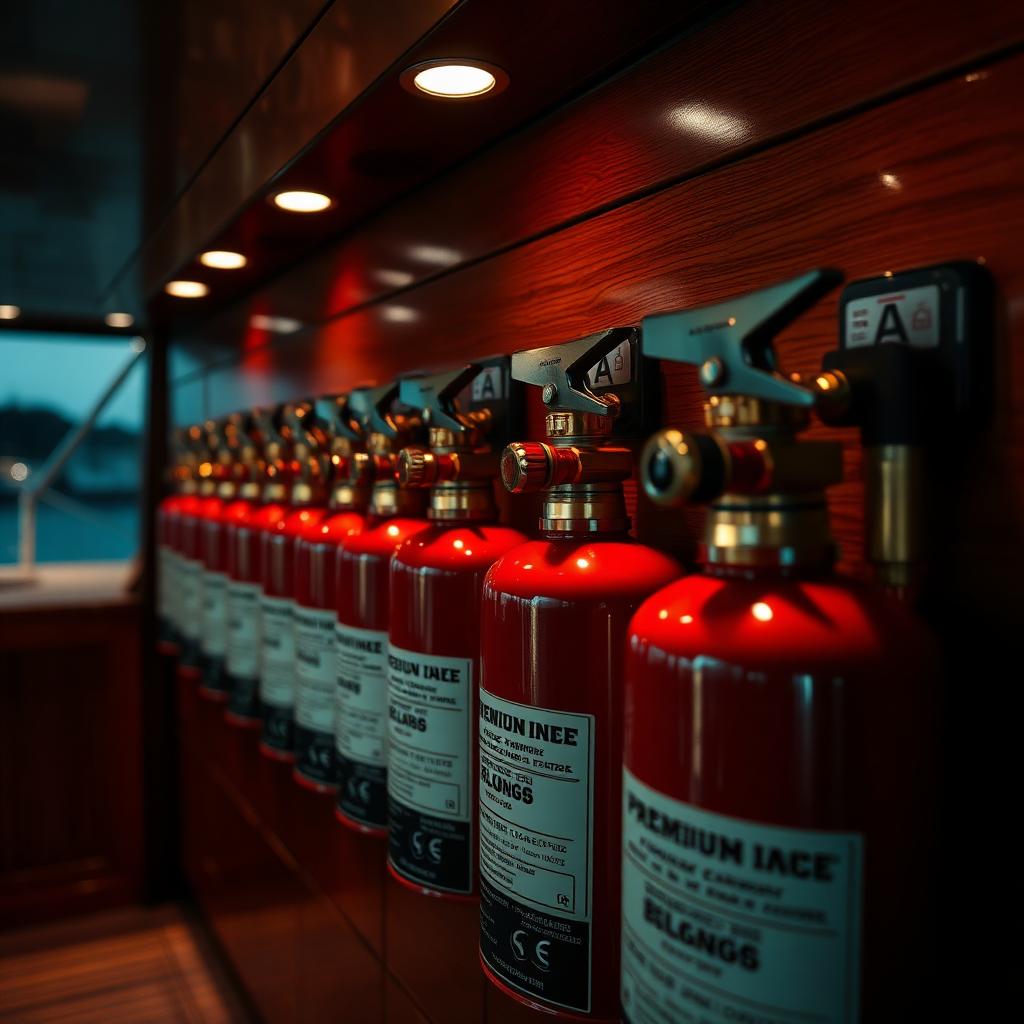
Vessels under 35 ft typically need 2–3 ABC portable extinguishers and a CO detector if there's an enclosed cabin. 35–50 ft vessels add a Novec 1230 fixed engine-room cylinder, an automatic shutdown, and a helm pull station. 50–75 ft vessels add a galley K-class extinguisher, secondary detection, and a dedicated genset-box clean-agent cylinder. 75–110 ft vessels require redundant fixed cylinders, a generator-box system, and full digital documentation. 110–150 ft+ superyachts need an integrated detection/suppression network per Lloyd's LY3 / MGN 280 plus crew firefighting equipment. Match equipment to compartments and risks, not just length.
What drives fire-protection requirements: length or layout?
Length is a starting point — USCG portable extinguisher requirements scale by length under 46 CFR 25.30 — but real protection scales by compartment count and risk. A 38 ft sportfish with a tight engine room and no genset needs less than a 38 ft trawler with a separate gen-set room, diesel heater, and a galley. Always count compartments (engine, gen-set, battery, galley, accommodation) and assess the risk in each before specifying equipment.
30–35 ft: the entry package
- 2× USCG-approved Type B-I dry chemical extinguishers (5 lb ABC) at helm and forward cabin
- 1× Type B-II (10 lb ABC) if vessel has an enclosed engine compartment
- 1× CMD6 CO detector if there's an enclosed sleeping cabin and gasoline power
- Optional: dedicated CMD6 CO detector in the helm console
Total installed package: $385–$685. Annual certification: $135–$185.
35–50 ft: the inflection point
This is where fixed suppression becomes non-negotiable on a diesel-powered vessel. Insurance carriers in South Florida routinely deny binding on a 40 ft+ vessel with diesel engines and no fixed engine-room system.
- Sea-Fire FG-200A or FG-375A Novec cylinder sized to engine-room volume
- Automatic engine/blower shutdown (Fireboy ASD or Sea-Fire ESRS)
- Manual helm pull station with 15–25 ft cable
- 3–4 portable extinguishers (ABC + 1 K-class if galley with cooktop)
- 2–3 CMD6 CO detectors (one per cabin)
- Smoke detectors per ABYC A-24 in each accommodation space
Total installed package: $2,150–$3,250. Annual certification: $385–$525.
50–75 ft: redundancy and zone control
- Sea-Fire FG-500A to FG-700A Novec engine-room cylinder
- Dedicated FG-100 / FG-200A clean-agent cylinder in genset sound box
- Automatic shutdown integrated with engine ECU and blowers
- Dual helm pull stations (flybridge and lower)
- 5–7 portable extinguishers including K-class in galley
- CO + smoke + heat detectors networked to a central monitoring panel
- Documented crew fire-response brief (recommended)
Total installed package: $4,150–$6,750. Annual certification: $585–$895.
75–110 ft: integrated systems
At this size, fire protection becomes a systems engineering problem rather than an equipment list. Cylinders are often paired or staged, detection is networked through NMEA 2000 or a dedicated fire panel, and documentation becomes a binder of binders.
- FG-1000A or FG-1300A primary cylinder + secondary FG-200A for genset compartment
- Dedicated FG-100 clean-agent cylinders in lazarette and electronics bays
- Multi-zone fire panel with addressable detectors
- Automatic shutdown wired to ECU CAN bus, blower contactors, and fuel valves
- Dedicated emergency cutoff at helm for entire engine-room AC bus
- Full digital documentation with photo records
- Onboard crew firefighting equipment (SCBA, fire blanket, axe) recommended
Total installed package: $9,500–$16,500. Annual certification: $1,150–$1,750.
110–150 ft+: superyacht and LY3 / MGN 280 territory
Vessels in this range are typically classed (Lloyd's LY3, MCA MGN 280, or RINA Charter Yacht) and the fire-protection scheme is dictated by class rules and the Statement of Compliance. Specification is done at build by the naval architect and the system integrator. For existing vessels, refits require class society approval and documentation chain-of-custody.
- Custom multi-cylinder Novec 1230 clean-agent system staged by zone
- Full addressable detection (smoke, heat, flame) in every compartment
- Class-approved fire panel with redundant power
- Integrated emergency shutdown affecting propulsion, generation, ventilation, and fuel
- Fire-fighting muster station with full SCBA, hoses, and crew turn-out gear
- Annual class-survey-approved certification by a class-recognized technician
- Digital documentation accessible from class portal
Pricing is project-specific; certification typically $3,500–$8,500 annually.
Sizing summary table
| Vessel size | Fixed system | Portables | Detection | Annual cert range |
|---|---|---|---|---|
| 30–35 ft | Not typically required | 2–3 ABC | 1× CO if enclosed cabin | $135–$185 |
| 35–50 ft | FG-200A / FG-375A clean agent | 3–4 + K-class | 2–3× CO + smoke | $385–$525 |
| 50–75 ft | FG-500A / FG-700A + genset FG-100 | 5–7 + K-class | Networked CO/smoke/heat | $585–$895 |
| 75–110 ft | FG-1000A / FG-1300A + secondary clean-agent cylinders | 8–12 + K-class | Addressable panel | $1,150–$1,750 |
| 110–150 ft+ | Custom multi-cylinder clean-agent system | 12+ + crew SCBA | Class-approved network | $3,500–$8,500 |
Novec 1230 vs FM-200: which clean agent should you specify?
Both Novec 1230 and FM-200 are clean-agent systems — they discharge as a gas, suppress fire within seconds, are safe for occupied engine rooms at design concentration, and leave zero residue. For new installs, Novec 1230 is the default choice on environmental and regulatory grounds. For existing FM-200 cylinders, full annual certification, refills, and 12-year hydrostatic service are all supported — there's no urgency to rip-and-replace a properly maintained FM-200 system.
South Florida-specific considerations
Vessels berthed in Miami-Dade, Broward, Palm Beach, and Monroe face higher humidity, salt-air corrosion, and lightning exposure than vessels in inland or northern waters. Practical implications: detector replacement is more frequent (5-year cycle is firm, not nominal), wiring corrosion at relay terminals is common (annual visual check is essential), and lightning surge can take out a fire panel and a battery bank simultaneously — surge protection on the panel feed is recommended on every vessel over 40 ft.
Common mistakes by vessel size
- 30–35 ft: Skipping the CO detector because 'I'm always in the cockpit' — generator exhaust at the slip is the real risk.
- 35–50 ft: Buying the cheapest fixed cylinder without verifying it covers actual engine-room volume.
- 50–75 ft: Forgetting the K-class extinguisher when the galley has a cooktop or fryer.
- 75–110 ft: Treating documentation as an afterthought — at this size, the binder is half the inspection.
- 110–150 ft+: Refitting without class society sign-off — invalidates the class certificate.
Greenfire Marine 自2014年起在南佛罗里达提供船舶消防保护认证。USCG和NFPA认证,全额保险,深受从迈阿密到基韦斯特船长的信赖。 了解更多关于团队 →
常见问题
What's the single most-overlooked piece of fire protection?+
The automatic shutdown device. Vessels of every size have fixed cylinders that can't actually extinguish the fire because the engines and blowers vent the agent overboard before it reaches design concentration.
Can I retrofit fire protection on an older 40 ft vessel?+
Yes — Sea-Fire and Fireboy both make retrofit kits with cylinder, mounting bracket, discharge nozzles, shutdown module, and helm pull. Typical retrofit on a 40 ft sportfish: 1.5–2 days, $2,200–$3,400 turnkey.
How do I know if my engine room is over- or under-protected?+
Measure net cubic footage and compare to the cylinder chart. Greenfire performs this assessment free of charge during the annual certification visit.
What's the difference between Novec 1230 and FM-200?+
Both are clean-agent systems — gaseous discharge, fast suppression, occupied-space safe at design concentration, and zero residue. Novec 1230 is the current default for new installs (near-zero GWP). FM-200 is fully serviceable on existing cylinders and remains a strong choice for refills and recertification.
Does upgrading fire protection lower my insurance premium?+
Yes — typical premium credits in South Florida range from 3–8% for vessels with documented fixed suppression, automatic shutdown, and current certification through a single qualified technician.