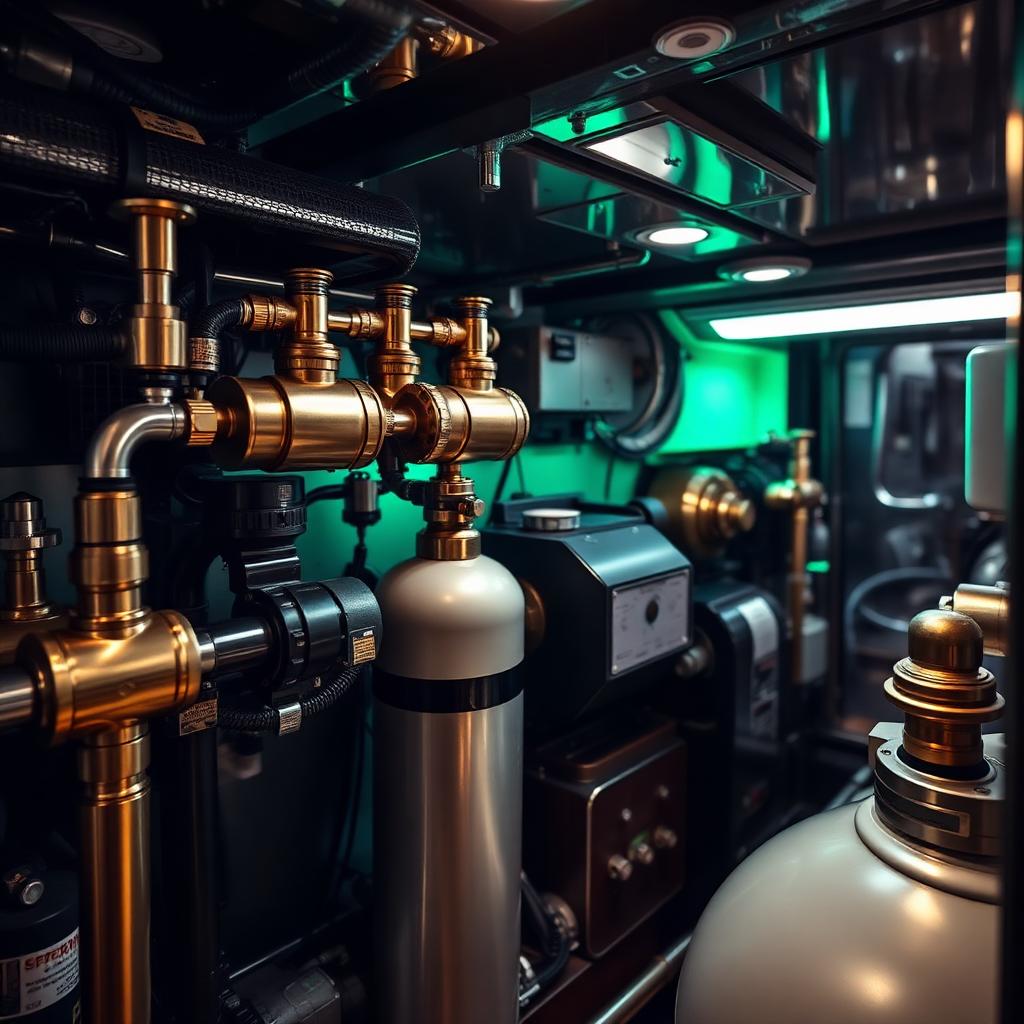
The best fixed fire suppression system for a yacht engine room in 2026 is a Sea-Fire FG-series or Fireboy-Xintex MA2 Novec 1230 clean-agent cylinder sized to the compartment's net cubic footage, paired with an automatic engine/blower shutdown and a manual helm pull station. Novec 1230 leads on environmental and regulatory grounds; FM-200 remains a fully serviceable clean-agent option on existing installs. Match the cylinder to volume, not vessel length — a 50 ft sportfish with twin diesels often needs the same cylinder as a 60 ft cruiser with a smaller engine room.
What makes a fixed suppression system 'best' for a yacht?
Five factors decide the answer: agent type (Novec 1230 or FM-200 clean agent), sizing to net engine-room volume, automatic shutdown integration, certification serviceability in your cruising area, and total cost of ownership across the 12-year cylinder life. A system that wins on price but can't be serviced in Fort Lauderdale, or one that's perfectly sized but lacks an engine shutdown loop, isn't the best — it's the cheapest.
Agent comparison: Novec 1230 vs FM-200
| Agent | Design conc. | Occupied safe? | GWP | Status 2026 | Best for |
|---|---|---|---|---|---|
| Novec 1230 (FK-5-1-12) | 4.5–5.9% | Yes (NOAEL 10%) | <1 | Current standard | All new installs |
| FM-200 (HFC-227ea) | 7.0% | Yes (NOAEL 9%) | 3,220 | Fully serviceable | Existing installs, refills, recerts |
| Halon 1301 (legacy) | 5–7% | Yes (legacy) | 5,400 (banned) | Replacement required | Convert to Novec |
For 99% of recreational and light-commercial yachts in 2026, the choice is Novec 1230 for new installs. FM-200 — often referred to interchangeably as a 'clean agent' system — remains a fully supported option for existing cylinders, annual certification, and refills. Both agents are safe for occupied spaces at design concentration and leave zero residue after discharge.
Brand comparison: Sea-Fire vs Fireboy-Xintex vs Kidde
| Brand | Flagship Novec line | Range | Service network FL | Notable |
|---|---|---|---|---|
| Sea-Fire | FG-series | 100–1500 ft³ | Excellent (Annapolis-based, FL dealers) | Native ESRS shutdown integration |
| Fireboy-Xintex | MA2 / CG series | 100–1500 ft³ | Excellent (Grand Rapids, strong FL) | Best ABS-typed cylinders |
| Kidde | WHDR / Marine Series | Commercial only | Limited recreational FL | Strong for inspected passenger vessels |
How to size by net cubic footage (not vessel length)
- Measure the engine compartment: length × width × average height in feet.
- Subtract the volume of large solid masses (engines, gen-set, fuel manifolds). For twin-diesel sportfish, use a 12% rule-of-thumb deduction; for single-engine express cruisers, 7%.
- The result is net cubic feet — match to the cylinder chart for your chosen brand and agent.
- Always round up to the next cylinder. Under-protection voids the insurance claim if the fire is not extinguished.
- Verify the cylinder choice with a Sea-Fire or Fireboy sizing calculator (free online) or a certified marine technician.
Sizing table by vessel length (typical, verify on your boat)
| Vessel length | Typical engine-room volume | Recommended Novec cylinder | Estimated installed cost |
|---|---|---|---|
| 25–32 ft outboard / I/O | 60–100 ft³ | Sea-Fire FG-100A / Fireboy MA2-100 | $685–$895 |
| 32–40 ft express | 100–200 ft³ | FG-200A / MA2-200 | $895–$1,275 |
| 40–50 ft sportfish | 200–375 ft³ | FG-375A / MA2-375 | $1,275–$1,795 |
| 50–60 ft motoryacht | 375–500 ft³ | FG-500A / MA2-500 | $1,675–$2,250 |
| 60–75 ft motoryacht | 500–700 ft³ | FG-700A / MA2-700 | $2,150–$2,895 |
| 75–90 ft yacht | 700–1000 ft³ | FG-1000A / MA2-1000 | $2,800–$3,750 |
| 90–110 ft yacht | 1000–1500 ft³ | FG-1300A / FG-1500A | $3,650–$4,950 |
| 110–150 ft+ yacht | 1500+ ft³ | Custom multi-cylinder | Quote required |
What about the shutdown device and pull station?
Every fixed system needs an automatic engine and blower shutdown — see the Fireboy Automatic Shutdown Device installation guide for wiring detail. Both Sea-Fire (ESRS) and Fireboy (ASD) make native modules. A manual helm pull station is required by ABYC A-4 and most insurers; a 25 ft cable from cylinder head to helm is standard, longer runs use a hydraulic or electric remote release.
Total cost of ownership over 12 years
Take a 50 ft sportfish with an FG-375A Novec system. Installed cost: $1,500. Annual certification: $395 × 11 years = $4,345. 6-year agent re-analysis: $215. 12-year hydrostatic + agent transfer: $625. Shutdown module replacement at year 7: $385. Total 12-year ownership: $7,070, or $589/year. A discharge event adds $895–$1,150 for refill but is rare — Greenfire averages one real engine-room discharge per 400 vessels per year.
South Florida availability and service network
Sea-Fire and Fireboy-Xintex both stock at South Florida marine distributors (Lighthouse Marine, Sailorman, West Marine Pro). Greenfire Marine carries the most common Novec 1230 and FM-200 clean-agent cylinders for next-day install across Miami-Dade, Broward, Palm Beach, and the Keys. Custom configurations for vessels 90 ft+ ship in 5–10 business days from the manufacturer.
Common mistakes when picking a system
- Sizing by vessel length instead of engine-room volume.
- Forgetting the engine/blower shutdown, then failing insurance survey.
- Choosing a brand with no local service network (some European systems require manufacturer-only refill).
- Mounting the cylinder where the gauge isn't visible at inspection.
Dockside marine fire certification across South Florida.
USCG & NFPA certified technicians. Same-day appointments available in most ZIPs. Bundle equipment + certification and save 15%.
Greenfire Marine has certified marine fire protection across South Florida since 2014. USCG and NFPA credentialed, fully insured, and trusted by captains from Miami to Key West. Read more about the team →
Frequently asked questions
Can I install a fixed system myself?+
Cylinder mounting and discharge piping can be DIY on a recreational vessel, but the cylinder must be certified by a qualified technician before commissioning and the automatic shutdown wiring should be installed or verified by a marine electrician. Insurance and surveyors expect a technician sign-off.
How long does Novec 1230 last in the cylinder?+
Indefinitely with annual weight verification. The cylinder is super-pressurized with nitrogen; agent stability is confirmed at the 6-year sample re-analysis.
What's the difference between Novec 1230 and FM-200?+
Both are clean agents — they discharge as a gas, suppress fire in seconds, and leave no residue. Novec 1230 has a near-zero global warming potential and is the default for new installs; FM-200 is fully serviceable on existing cylinders and remains a strong choice for refills and recertification.
What happens to my old FM-200 system?+
It can continue in service indefinitely with annual certification. When the 12-year hydrostatic comes due, owners often refill the existing FM-200 cylinder or convert to a Novec FG-series cylinder reusing the bracket and piping — both paths are supported.
Do I need a separate system for the generator compartment?+
If the genset is in its own enclosed sound box, yes — typically a small FG-100 clean-agent cylinder. If the genset shares the main engine room, the engine-room cylinder protects both.