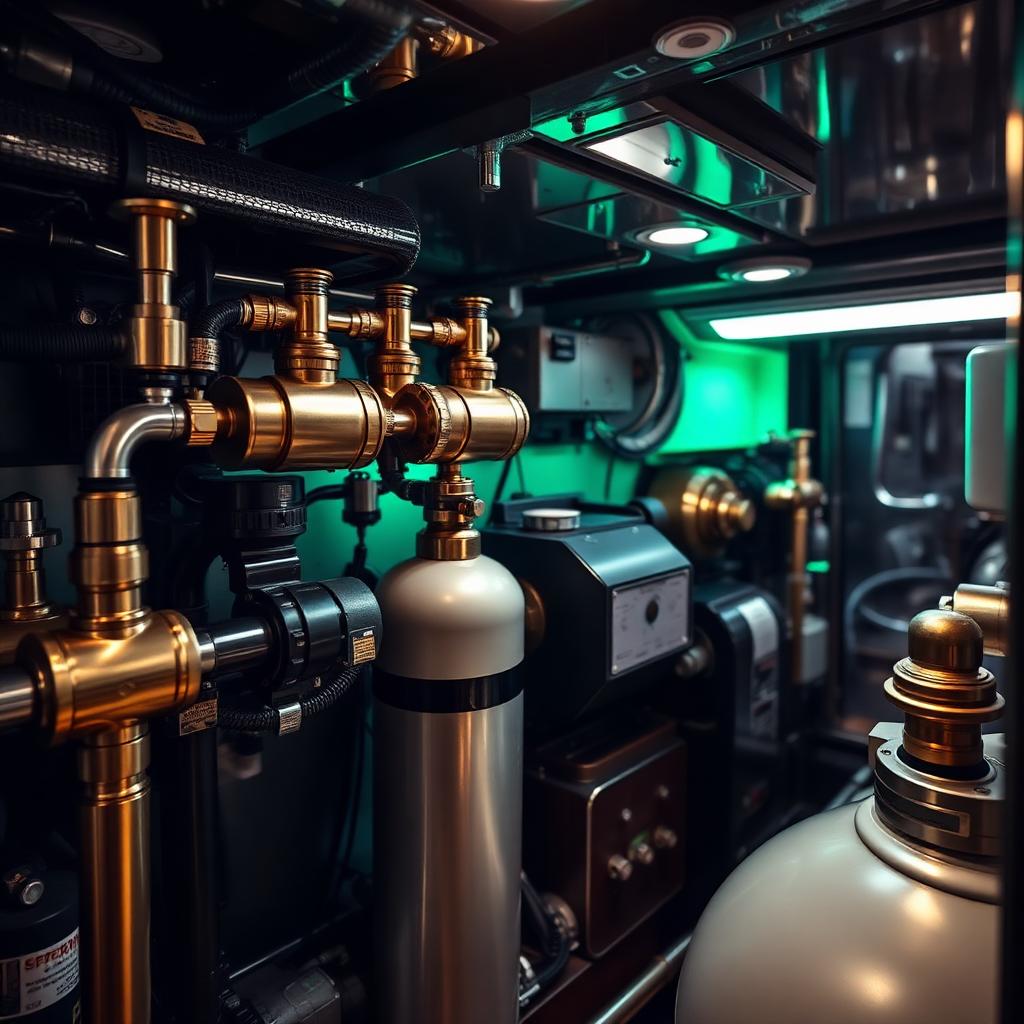
Sea-Fire Novec 1230 pre-engineered systems are clean-agent fixed suppression units sized to engine-room volume (in cubic feet) and designed to extinguish a Class B engine-room fire in under 10 seconds at a 4.5–5.9% concentration. They require annual certification by a qualified marine technician (cylinder weight within 5%, pressure verified, releasing circuit functional-tested, automatic shutdown verified), 12-year hydrostatic retest on the cylinder, and 6-year agent re-analysis. Novec 1230 is the modern replacement for halon and FM-200 with zero ozone-depletion potential, 5-day atmospheric lifetime, and approval under USCG, ABYC A-4, and ISO 14520.
What is Sea-Fire Novec 1230 and why did it replace FM-200?
Novec 1230 (FK-5-1-12, fluoroketone) is 3M's clean-agent fire suppressant adopted by Sea-Fire across its pre-engineered FD, FM, and FG series cylinders. Where FM-200 (HFC-227ea) is a hydrofluorocarbon with a global warming potential of 3,220, Novec 1230 has a GWP of less than 1 and an atmospheric lifetime of just 5 days. The EU F-Gas Regulation and IMO MEPC guidelines now actively discourage new FM-200 installations in maritime use, and most major yacht builders (Viking, Hatteras, Sunseeker, Princess) have moved exclusively to Novec 1230 on new hulls since 2022.
From an operating standpoint Novec 1230 behaves like FM-200: liquid in the cylinder, gas on discharge, electrically non-conductive, safe for occupied spaces at design concentration, and visibility-clear after discharge. The differences are environmental (zero ozone depletion, near-zero GWP), regulatory (still permitted under EU F-Gas while FM-200 is phasing down), and cost (Novec agent is approximately 1.4× FM-200 per pound to refill).
How do you size a Sea-Fire Novec system to your engine room?
Sizing is volumetric. Measure the engine compartment length × width × average height in feet, subtract the displacement of large solid masses (engines, gen-set, fuel manifolds — Sea-Fire publishes a 12% rule-of-thumb deduction for twin-engine sportfish layouts), and match the net cubic footage to the cylinder chart below. Always size up to the next cylinder, never down — under-protection is the most common reason an insurance claim is denied after an engine-room fire.
| Sea-Fire model | Agent weight | Protected volume (net ft³) | Typical vessel size |
|---|---|---|---|
| FG-100A | 2.4 lb | Up to 100 | 25–32 ft outboard / I/O |
| FG-200A | 4.8 lb | 100–200 | 32–40 ft express, single diesel |
| FG-375A | 9.0 lb | 200–375 | 40–50 ft sportfish, twin diesel |
| FG-500A | 12.0 lb | 375–500 | 50–60 ft motoryacht |
| FG-700A | 16.8 lb | 500–700 | 60–75 ft motoryacht with gen |
| FG-1000A | 24.0 lb | 700–1000 | 75–90 ft motoryacht, twin gen |
| FG-1300A / FG-1500A | 31–36 lb | 1000–1500 | 90–110 ft yacht |
What does annual certification of a Sea-Fire Novec system include?
- Visual inspection of cylinder, brackets, nozzles, and discharge piping for corrosion, damage, or paint over-spray that hides the gauge.
- Cylinder weight on a calibrated scale — must be within 5% of stamped full weight or the cylinder is condemned and refilled.
- Pressure verification at temperature (Sea-Fire publishes a temperature-corrected pressure chart; 360 psi at 70°F is nominal).
- Releasing circuit continuity test from manual pull station and from thermal/electric initiation.
- Pressure switch functional test confirming engine shutdown and blower kill activate on simulated discharge.
- Inspection of the automatic shutdown device wiring, fuse, and manual override.
- Replacement of the cylinder seal and tamper indicator if disturbed.
- New dated certification tag affixed to the cylinder; digital record uploaded to the vessel's fire-system file.
What is the certification cycle: annual, 6-year, 12-year?
| Interval | Action | Typical cost (South Florida) |
|---|---|---|
| Annual | Full visual + weight + pressure + functional test + tag | $295–$495 |
| 6 years | Agent sample re-analysis (per NFPA 2001 / ISO 14520) | $185–$240 |
| 12 years | Hydrostatic retest of cylinder; agent transfer; new burst disc | $485–$770 |
| After any discharge | Refill with Novec 1230 + retest + re-tag | $425+ per lb of agent + labor |
How much does a Sea-Fire Novec refill cost in 2026?
Novec 1230 agent is currently priced at $58–$72 per pound wholesale in South Florida, with a marked-up installed cost of $90–$115 per pound including labor and a fresh nitrogen super-pressurization charge. A typical FG-375A (9 lb) refill after a discharge runs $895–$1,150 turnkey; an FG-700A (16.8 lb) runs $1,575–$2,000. Prices have softened ~8% since the 2024 supply pinch and are expected to stay flat through 2026 as 3M's Decatur plant runs at full capacity.
Why is Novec 1230 safe for occupied spaces?
The design concentration for Class B fires is 4.5–5.9%. The NOAEL (no observed adverse effect level) is 10% — meaning the agent provides a 67–122% safety margin between extinguishing concentration and the threshold where any physiological effect could occur. Crew can remain in the compartment during and after discharge long enough to evacuate. Visibility stays clear because Novec is a vaporized liquid, not a particulate; there's no powder residue and no equipment damage. Electronics restart normally after ventilation.
South Florida certification coverage
Greenfire Marine performs Sea-Fire Novec certification dockside at every major marina in Miami-Dade (Bayshore, Dinner Key, Miami Beach Marina, Sunset Harbour, Hurricane Cove), Broward (Bahia Mar, Pier Sixty-Six, Lauderdale Marine Center, Sunrise Harbor, Hi-Lift Hillsboro, Lighthouse Point Marina, Sands Harbor), Palm Beach (Rybovich, Old Port Cove, North Palm Beach Marina, Sailfish Marina), and Monroe (Stock Island, Faro Blanco, Garrison Bight). Same-week scheduling is standard; emergency post-discharge refills are typically completed within 48 hours.
Marine compliance notes
- USCG approval under 46 CFR 162.163 for clean-agent extinguishing systems
- ABYC A-4 compliant for engine-room fixed suppression on recreational vessels
- ISO 14520-5 (clean-agent design) and ISO 8846 (ignition protection) compliant
- CE-marked components for European cruising
- NFPA 2001 design standard for occupied spaces
Common pitfalls owners hit
- Repainting the engine room and covering the cylinder pressure gauge — gauge must remain visible for inspection.
- Adding a battery bank or inverter charger that increases compartment heat load, pushing the room above the temperature the system was sized for.
- Removing the automatic shutdown wiring during an unrelated electrical refit and never reconnecting it.
- Allowing the 12-year hydrostatic to lapse — a Novec cylinder without current hydro cannot be refilled and must be scrapped.
- Mounting new equipment in front of a discharge nozzle, blocking the spray pattern.
Dockside marine fire certification across South Florida.
USCG & NFPA certified technicians. Same-day appointments available in most ZIPs. Bundle equipment + certification and save 15%.
Greenfire Marine has certified marine fire protection across South Florida since 2014. USCG and NFPA credentialed, fully insured, and trusted by captains from Miami to Key West. Read more about the team →
Frequently asked questions
Can I switch from FM-200 to Novec 1230 in the same cylinder?+
No. The cylinders are similar but the valve internals, burst disc rating, and agent compatibility differ. Switching requires a new Sea-Fire FG-series cylinder. The mounting bracket and discharge piping are usually reusable.
Is Novec 1230 being phased out like FM-200?+
No. Novec 1230 has near-zero GWP and is not subject to F-Gas or AIM Act phasedown. It is the long-term replacement for halon and FM-200 in marine clean-agent systems.
How long does the agent stay in the cylinder?+
Indefinitely under proper storage. The cylinder is super-pressurized with nitrogen to 360 psi at 70°F, and annual weight checks confirm no leakage. Agent sample re-analysis at 6 years confirms chemical stability.
What's the difference between Sea-Fire FG, FD, and FM series?+
FG is the current pre-engineered Novec 1230 line for recreational and light-commercial. FD is the legacy FM-200 line (being phased out on new installs). FM is a manual-discharge line for fishing boats under 30 ft. Greenfire services all three.
Do I need a separate manual pull station?+
ABYC A-4 strongly recommends and most insurers require a remote manual pull at the helm so the captain can discharge the system without entering the engine room. Sea-Fire pull cables run up to 25 ft from the cylinder.