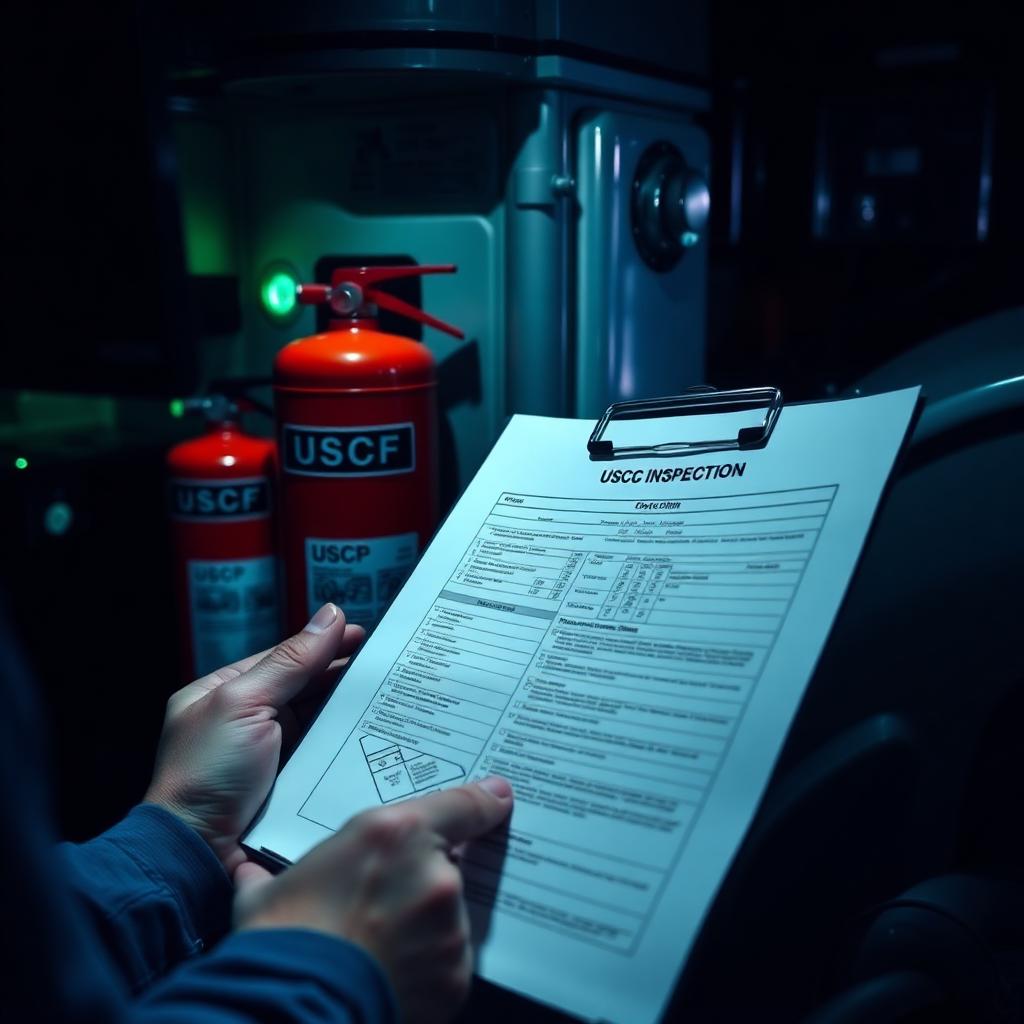
Every USCG-inspected vessel and every recreational vessel insured for over $250,000 in 2026 should maintain a fire-safety binder (paper or digital) containing: dated certification tags on each device, the most recent annual inspection report, hydrostatic test certificates for cylinders, manufacturer documentation for every fixed system, a monthly self-test log for CO and smoke detectors, the discharge log for any cylinder event, and the crew fire-response drill log. The 2026 update requires digital records to be retrievable within 24 hours of an inspector or insurer request. Greenfire issues both a physical tag and a cloud-hosted digital record for every certification.
Who actually requires fire-safety documentation?
| Audience | What they want | Authority |
|---|---|---|
| USCG (inspected vessels) | Annual inspection report, tags, hydrostatic certs, drill log | 46 CFR 25.30, 34, 162.163 |
| USCG (recreational, boarding) | Current tag and serviceable equipment | 46 CFR 25.30 |
| Marine surveyor (pre-purchase) | Full binder + 3 years of history | Survey industry standard |
| Insurance underwriter | Current annual cert + shutdown wiring proof | Policy condition |
| FWC (Florida) | Current tags during charter operations | FL §327 |
| Foreign port state control | Compliance with SOLAS / LY3 / MGN 280 | International |
What goes on a certification tag?
- Date of inspection (month and year)
- Date of next required inspection
- Technician name and certification number
- Servicing company name and contact
- Device serial number or unique ID
- Type of service performed (visual, weight, hydrostatic, refill)
The 2026 NFPA 10 update added the technician certification number as a required field on the tag — older 'company name only' tags will be flagged at survey. Greenfire's tags include all six fields plus a QR code that links to the cloud-hosted record.
What is the minimum documentation set?
- Annual inspection report signed by a qualified technician.
- Certification tag on every extinguisher, fixed cylinder, and detector.
- Hydrostatic test certificate for any cylinder over 5 years old (portable) or 12 years (fixed).
- Manufacturer manual and design documentation for each fixed suppression system.
- Wiring schematic showing engine and blower shutdown loops.
- Monthly detector self-test log (CO, smoke, heat) — initialled by captain or owner.
- Drill log showing crew fire-response practice at least quarterly on commercial vessels.
- Discharge event log (zero entries is the right answer for most vessels).
- List of all equipment with serial numbers, install dates, and replacement-due dates.
How long do you keep records?
| Document | Retention | Why |
|---|---|---|
| Annual inspection reports | 5 years minimum, life of vessel preferred | Survey + insurance claims |
| Hydrostatic certificates | Life of the cylinder | Required at every refill |
| Detector test logs | 2 years rolling | ABYC A-24 / insurance |
| Drill logs | 3 years (commercial) | USCG inspection |
| Discharge event reports | Life of vessel | Insurance + resale |
| Equipment serial list | Life of vessel, updated annually | Replacement planning |
Paper binder vs digital — what's required in 2026?
Both are acceptable. USCG inspectors still accept a well-organized paper binder, but every major insurer and every USCG sector now requests digital records be retrievable within 24 hours. The cleanest setup is paper tags on the equipment plus a cloud-hosted digital binder (Google Drive, Dropbox, or a marine-specific platform). Greenfire's certifications automatically populate a customer portal with PDF reports, photos, and history — accessible from any device.
How do you survive a surprise USCG boarding?
- Keep the physical binder in a labeled bulkhead pocket near the helm — every captain knows where it is.
- Have the cloud link bookmarked on the helm tablet or captain's phone.
- Verify tags are legible and not faded by UV — replace at every annual.
- Run a 30-second tour: extinguisher locations, fixed-system cylinder, helm pull, shutdown override, detector locations.
- Show the most recent drill log (commercial vessels).
- Document any deficiency the officer notes and correct it within the timeframe given.
What surveyors look for at pre-purchase
- Three years of continuous certification — gaps suggest deferred maintenance
- Hydrostatic dates on every cylinder
- Photographs in the digital record showing cylinder serial numbers and gauges
- Engine and blower shutdown wiring schematic
- Drill log if the vessel was in charter use
- Discharge history — every event explained, with refill documentation
South Florida insurance trends in 2026
Insurers serving Miami-Dade, Broward, Palm Beach, and Monroe have tightened documentation rules through 2026. Travelers Yacht now requires photo evidence of automatic shutdown wiring on any fixed-system vessel over 40 ft. Markel requires a digital binder retrievable from the helm. Chubb has added a 5% premium credit for vessels with continuous 3-year certification through a single qualified technician — a strong argument for staying with one service provider.
Dockside marine fire certification across South Florida.
USCG & NFPA certified technicians. Same-day appointments available in most ZIPs. Bundle equipment + certification and save 15%.
Greenfire Marine has certified marine fire protection across South Florida since 2014. USCG and NFPA credentialed, fully insured, and trusted by captains from Miami to Key West. Read more about the team →
Frequently asked questions
What if I lose the original hydrostatic certificate?+
The certifying station retains records for at least 10 years. Greenfire can request a duplicate from the station for any cylinder we've serviced. For older cylinders without recoverable records, a new hydrostatic test is required before the next refill.
Are emailed PDFs of tags acceptable?+
Yes for record-keeping and insurance, but the physical tag must still be affixed to the device for USCG boarding compliance.
How often do commercial vessels need to run fire drills?+
Quarterly minimum under USCG Subchapter T, monthly is recommended for charter passenger vessels. Drill log retained for 3 years.
Do I need separate documentation for each device?+
No — a consolidated binder or digital folder per vessel is the norm. Each device gets a tag, and the binder ties them together with serial numbers and dates.
Will documentation help at resale?+
Materially. Vessels with 3+ years of continuous certification through a recognized technician sell faster and at firmer prices in the South Florida brokerage market.