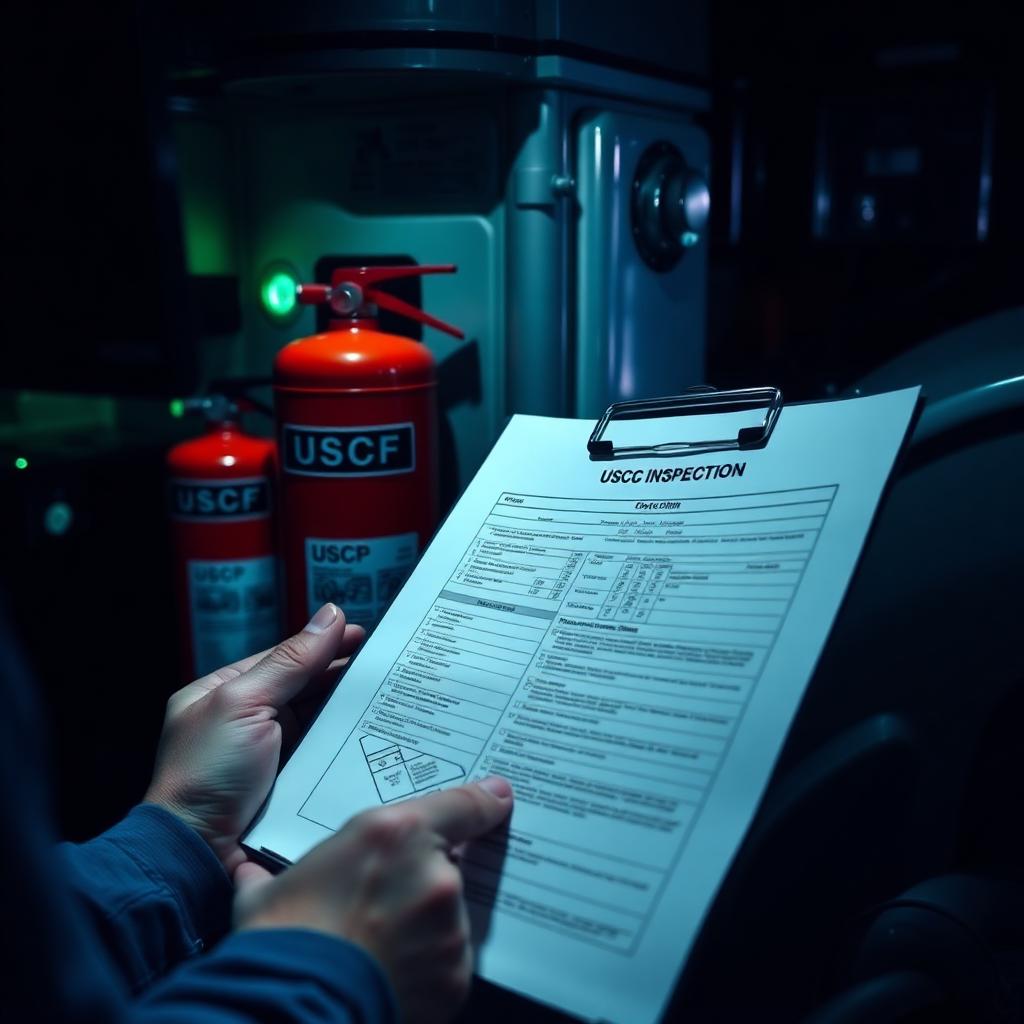
Every USCG-inspected vessel and every recreational vessel insured for over $250,000 in 2026 should maintain a fire-safety binder (paper or digital) containing: dated certification tags on each device, the most recent annual inspection report, hydrostatic test certificates for cylinders, manufacturer documentation for every fixed system, a monthly self-test log for CO and smoke detectors, the discharge log for any cylinder event, and the crew fire-response drill log. The 2026 update requires digital records to be retrievable within 24 hours of an inspector or insurer request. Greenfire issues both a physical tag and a cloud-hosted digital record for every certification.
Who actually requires fire-safety documentation?
| Audience | What they want | Authority |
|---|---|---|
| USCG (inspected vessels) | Annual inspection report, tags, hydrostatic certs, drill log | 46 CFR 25.30, 34, 162.163 |
| USCG (recreational, boarding) | Current tag and serviceable equipment | 46 CFR 25.30 |
| Marine surveyor (pre-purchase) | Full binder + 3 years of history | Survey industry standard |
| Insurance underwriter | Current annual cert + shutdown wiring proof | Policy condition |
| FWC (Florida) | Current tags during charter operations | FL §327 |
| Foreign port state control | Compliance with SOLAS / LY3 / MGN 280 | International |
What goes on a certification tag?
- Date of inspection (month and year)
- Date of next required inspection
- Technician name and certification number
- Servicing company name and contact
- Device serial number or unique ID
- Type of service performed (visual, weight, hydrostatic, refill)
The 2026 NFPA 10 update added the technician certification number as a required field on the tag — older 'company name only' tags will be flagged at survey. Greenfire's tags include all six fields plus a QR code that links to the cloud-hosted record.
What is the minimum documentation set?
- Annual inspection report signed by a qualified technician.
- Certification tag on every extinguisher, fixed cylinder, and detector.
- Hydrostatic test certificate for any cylinder over 5 years old (portable) or 12 years (fixed).
- Manufacturer manual and design documentation for each fixed suppression system.
- Wiring schematic showing engine and blower shutdown loops.
- Monthly detector self-test log (CO, smoke, heat) — initialled by captain or owner.
- Drill log showing crew fire-response practice at least quarterly on commercial vessels.
- Discharge event log (zero entries is the right answer for most vessels).
- List of all equipment with serial numbers, install dates, and replacement-due dates.
How long do you keep records?
| Document | Retention | Why |
|---|---|---|
| Annual inspection reports | 5 years minimum, life of vessel preferred | Survey + insurance claims |
| Hydrostatic certificates | Life of the cylinder | Required at every refill |
| Detector test logs | 2 years rolling | ABYC A-24 / insurance |
| Drill logs | 3 years (commercial) | USCG inspection |
| Discharge event reports | Life of vessel | Insurance + resale |
| Equipment serial list | Life of vessel, updated annually | Replacement planning |
Paper binder vs digital — what's required in 2026?
Both are acceptable. USCG inspectors still accept a well-organized paper binder, but every major insurer and every USCG sector now requests digital records be retrievable within 24 hours. The cleanest setup is paper tags on the equipment plus a cloud-hosted digital binder (Google Drive, Dropbox, or a marine-specific platform). Greenfire's certifications automatically populate a customer portal with PDF reports, photos, and history — accessible from any device.
How do you survive a surprise USCG boarding?
- Keep the physical binder in a labeled bulkhead pocket near the helm — every captain knows where it is.
- Have the cloud link bookmarked on the helm tablet or captain's phone.
- Verify tags are legible and not faded by UV — replace at every annual.
- Run a 30-second tour: extinguisher locations, fixed-system cylinder, helm pull, shutdown override, detector locations.
- Show the most recent drill log (commercial vessels).
- Document any deficiency the officer notes and correct it within the timeframe given.
What surveyors look for at pre-purchase
- Three years of continuous certification — gaps suggest deferred maintenance
- Hydrostatic dates on every cylinder
- Photographs in the digital record showing cylinder serial numbers and gauges
- Engine and blower shutdown wiring schematic
- Drill log if the vessel was in charter use
- Discharge history — every event explained, with refill documentation
South Florida insurance trends in 2026
Insurers serving Miami-Dade, Broward, Palm Beach, and Monroe have tightened documentation rules through 2026. Travelers Yacht now requires photo evidence of automatic shutdown wiring on any fixed-system vessel over 40 ft. Markel requires a digital binder retrievable from the helm. Chubb has added a 5% premium credit for vessels with continuous 3-year certification through a single qualified technician — a strong argument for staying with one service provider.
Certificación marítima contra incendios en muelle en todo el Sur de Florida.
Técnicos certificados USCG y NFPA. Citas el mismo día disponibles en la mayoría de los códigos postales. Combine equipos + certificación y ahorre 15%.
Greenfire Marine ha certificado protección marítima contra incendios en el Sur de Florida desde 2014. Acreditados USCG y NFPA, totalmente asegurados y de confianza para capitanes desde Miami hasta Key West. Conozca más sobre el equipo →
Preguntas frecuentes
What if I lose the original hydrostatic certificate?+
The certifying station retains records for at least 10 years. Greenfire can request a duplicate from the station for any cylinder we've serviced. For older cylinders without recoverable records, a new hydrostatic test is required before the next refill.
Are emailed PDFs of tags acceptable?+
Yes for record-keeping and insurance, but the physical tag must still be affixed to the device for USCG boarding compliance.
How often do commercial vessels need to run fire drills?+
Quarterly minimum under USCG Subchapter T, monthly is recommended for charter passenger vessels. Drill log retained for 3 years.
Do I need separate documentation for each device?+
No — a consolidated binder or digital folder per vessel is the norm. Each device gets a tag, and the binder ties them together with serial numbers and dates.
Will documentation help at resale?+
Materially. Vessels with 3+ years of continuous certification through a recognized technician sell faster and at firmer prices in the South Florida brokerage market.